

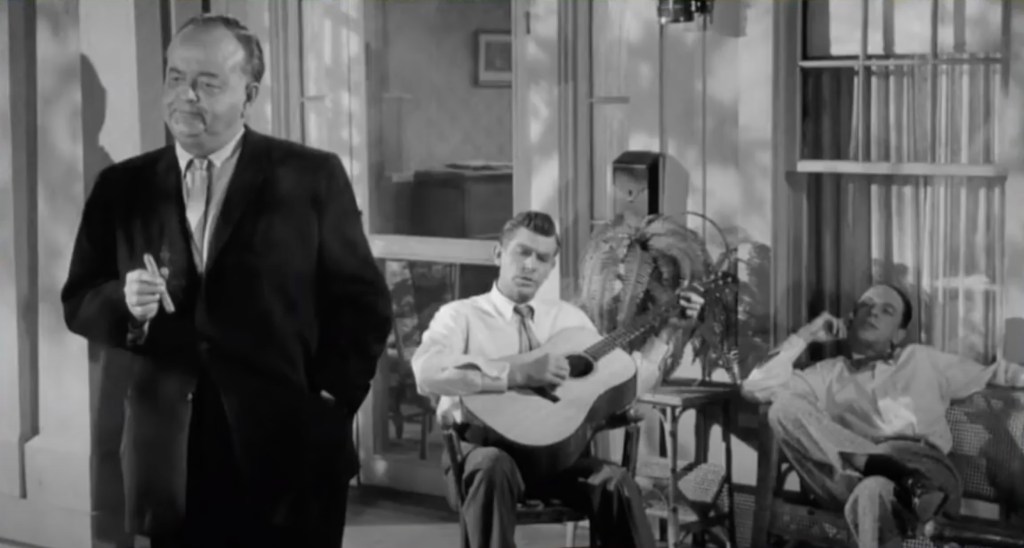
I stumbled across The Andy Griffith Show during one of those intentional late-night searches for something meaningful. Maybe my ex-colleague Mack had mentioned it once — I can’t quite remember — but something drew me to it, suggesting there was more beneath the surface than typical nostalgia television.
So I dove in. And what I discovered wasn’t just entertainment — it was a masterclass in finding depth in simplicity.
Season 3, Episode 16: “Man in a Hurry” really resonated with me. It follows Malcolm Tucker, a high-strung businessman whose car breaks down in Mayberry on a Sunday. He’s desperate to get back to his fast-paced world, but Mayberry operates on a different frequency entirely.
The town doesn’t accommodate urgency — especially not on a Sunday.
While Tucker fights against this rhythm, I found myself studying it. Stores closed without apology. Phones remained unanswered by design. Men gathered on porches to discuss pickles and choir practice with the same attention others might give to stock reports. Tucker’s initial frustration mirrors our modern relationship with pace — we’ve forgotten that some things require us to slow down to truly experience them.
Then came the scene that changed everything: Andy and Barney sitting on the porch, singing an old hymn about a little brown church in the vale.
That moment — unforced, authentic — revealed something profound about intentional living.
The Song: “The Little Brown Church in the Vale”
This hymn carries real history. Dr. William S. Pitts wrote it in 1857 after traveling through a valley near Bradford, Iowa. Something about that landscape inspired him to imagine a little church there, and he wrote the song from that pure vision. What makes it even more remarkable is that years later, a church was actually built in that same spot.
The song speaks to childhood, memory, and reverence, but it goes deeper than nostalgia. It’s about creating space for reflection in a world that rarely slows down enough to allow it.
There’s a church in the valley by the wildwood, No lovelier spot in the dale; No place is so dear to my childhood As the little brown church in the vale.
Come to the church in the wildwood, Oh, come to the church in the dale; No spot is so dear to my childhood As the little brown church in the vale.
Oh, come to the church in the wildwood, To the trees where the wild flowers bloom; Where the parting hymn will be chanted, We will weep by the side of the tomb.
Come to the church in the wildwood, Oh, come to the church in the dale; No spot is so dear to my childhood As the little brown church in the vale.
How sweet on a clear Sabbath morning To list to the clear ringing bell; Its tones so sweetly are calling, Oh, come to the church in the vale.
Come to the church in the wildwood, Oh, come to the church in the dale; No spot is so dear to my childhood As the little brown church in the vale.
From the church in the valley by the wildwood, When day fades away into night, I would fain from this spot of my childhood Wing my way to the mansions of light.
Come to the church in the wildwood, Oh, come to the church in the dale; No spot is so dear to my childhood As the little brown church in the vale.
By William S. Pitts (1857)
Here is a brief video with the song.
I didn’t grow up with a little brown church in the valley. But somehow, this song gave me one.
Rather than accepting that the world feels too fast, too loud, too overwhelming, why not choose to create pockets of intentional stillness? This black-and-white show from the 1960s and its 1800s hymn became catalysts for that choice — reminders that we can actively seek beauty in quiet moments while still engaging fully with the world around us.

Leave a comment